Too Many Interests
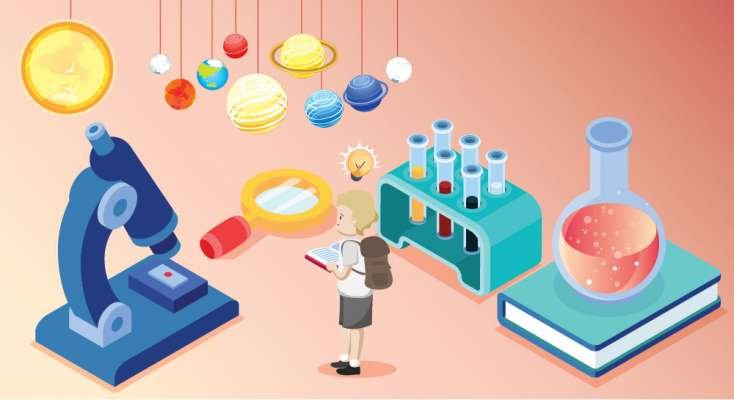
Some people do not have just one interest or one field they want to pursue. They are curious about many different things: technology, art, psychology, languages, science, music, or countless other subjects. Because of this, they may struggle to choose one career, one field to specialize in, or even one thing to focus on for a long time. While other people seem to have a clear path, they may constantly wonder, “Which one should I choose?” or “Why can’t I just stick to one thing?” This can make them feel unfocused or even behind others. But having many interests may not be a weakness at all. In psychology, there is a name for this pattern: polymathy.
When Curiosity Has a Name
A polymath, sometimes called a multipotentialite, is someone who seriously develops knowledge or skills in several different fields instead of concentrating on only one.
Research on highly accomplished people, including Nobel Prize winners, has found that many of them had serious interests outside their main fields. They painted, played instruments, wrote, built things, or studied completely different subjects. Their wide interests were not necessarily distractions; they could contribute to their creativity and help them develop new ideas.
What Happens When Different Worlds Collide?
One of the biggest advantages of having multiple interests is transfer. Our brains do not keep everything we learn in completely separate boxes. We can sometimes take a pattern, method, or idea from one field and apply it to another.
For example, someone who studies music may develop a different way of thinking about patterns and structure, while someone interested in psychology may use what they learn to understand communication or business.
Your different interests can therefore become connected instead of remaining separate.
When Expertise Becomes a Cage
Another important concept is cognitive entrenchment. As people become deeply specialized in one field, their way of thinking can sometimes become more fixed. Their expertise makes them faster and more efficient, but it may also make it harder to question familiar ideas or consider approaches that do not fit their usual way of thinking.
Exploring different fields can expose a person to new ways of thinking and help develop adaptability.
Your Secret Weapon: The Combination
You do not necessarily have to be the world's best photographer, programmer, writer, or designer. You can combine several skills and create a unique intersection.
Imagine someone who understands programming, design, and communication. Each skill alone may have many competitors, but the combination of all three can create a much more unusual skill set.
The power may not be in being extraordinary at one thing, but in becoming good at several things that work well together.
Too Many Interests… or Too Many Unfinished Things?
There is an important difference between being a polymath and simply collecting interests.
A person can watch tutorials, buy equipment, read a few chapters, start a project, and then abandon it as soon as the excitement disappears. Having a long list of interests does not automatically make someone a polymath.
The key is to go beyond curiosity. Learn, practise, and finish things. You do not need to master every field, but you should develop your interests enough to create something real from them.
Three Rules to Turn Curiosity into an Advantage
1. Finish things.
Do not only start. Complete projects, performances, experiments, or other forms of work.
2. Build bridges.
When you learn something new, ask yourself: “Where else could this idea be useful?” Look for connections between your different interests.
3. Go deep in seasons.
You do not have to study everything at once. Focus deeply on one interest for a period of time while allowing your other interests to wait. Later, you can return to them with new knowledge and connect what you have learned.
From Scattered Seeds to a Forest
Having many interests can feel confusing, especially when everyone seems to have one clear career or identity. But different interests do not have to compete with each other.
When they are developed and connected, they can form a network of knowledge where one interest feeds another. What first looked like scattered curiosity can gradually become a system of skills, ideas, and experiences.
Comment

Amina Zidi
I really enjoyed reading this blog. I agree that having many interests can be a strength, not a weakness. I especially like the idea of connecting different interests and learning from each one. The three rules are also useful, especially finishing what we start.